Unlock the secrets to launching a successful home building business with our comprehensive step-by-step manual. Start building homes today
"Similar to how you found this page, we'll do the same for your home building website and brand! We don’t just do SEO — we’re pioneering Generative Search Optimization (GEO) and Answer Engine Optimization (AEO) for home builders. Prepare to be excited!"
🔥 Try our NEW SEO/AEO Feature!
Starting a home building business means stepping into one of the few trades where a single job runs for the better part of a year, and every decision you make in month one is still costing or earning you money in month ten. Demand holds up because housing supply does not keep pace with household formation in most markets, but the builders who last are not the ones who caught a good market. They are the ones who knew their costs, kept their trades loyal, and could still answer the phone in week thirty of a build.
With this step-by-step manual, aspiring builders will get the mechanics, the licensing, the insurance, the capital and the systems, along with the parts nobody warns you about. Home building is a scheduling and communication business with construction attached. The framing is the easy part. Keeping fifteen subcontractors, a lender, an inspector and an anxious family pointed at the same date is the job you are actually taking on.
How much to rank your home building business? (You'll be pleasantly surprised!) Find Out here >>
Before we get into it, we have a lifetime promo for your new home building business!
Servgrow Home Building Software
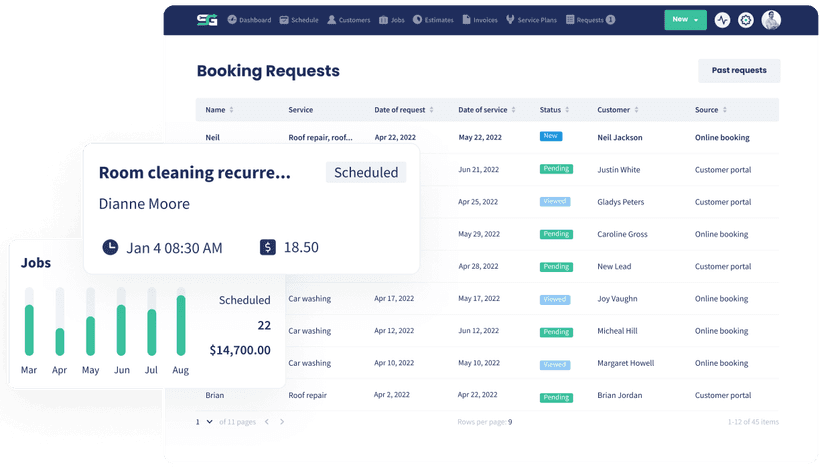
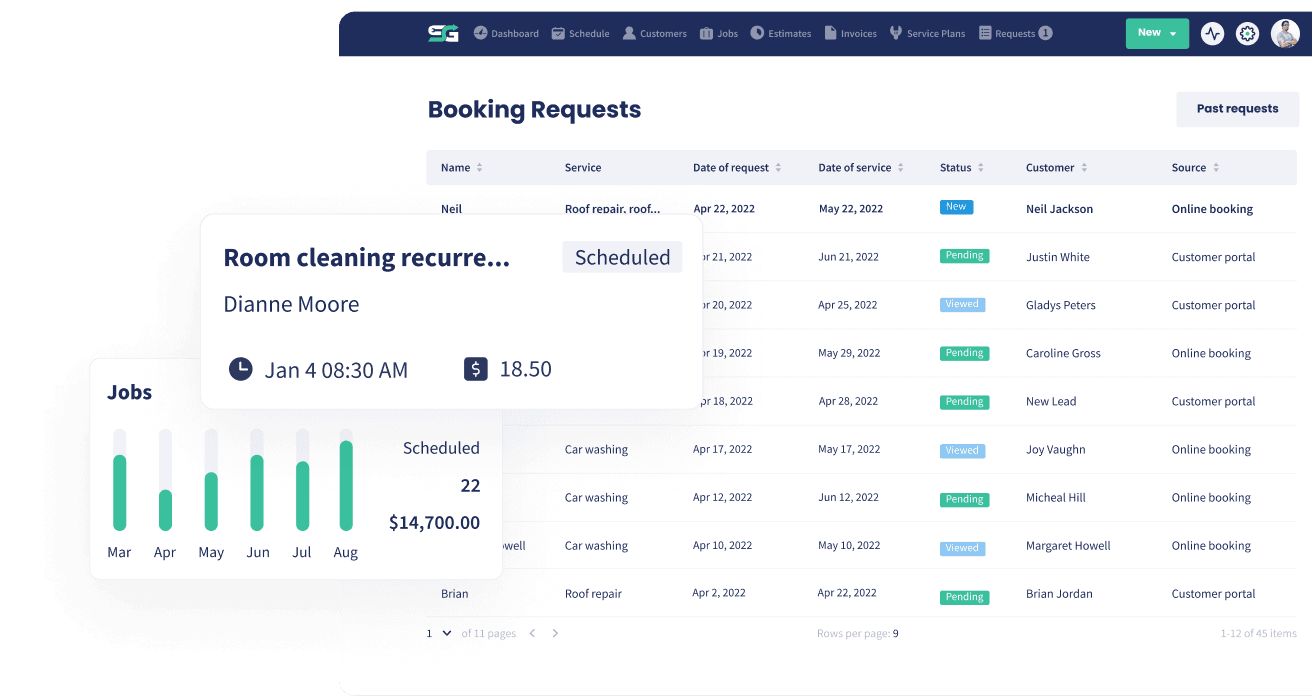
Home Building Software is one of the most important things to have when running a home building business. Servgrow will help streamline your business, effectively communication back and forth with your customers, save you huge amounts of time each week and give your customers an amazing experience that will have them coming back to you for life!
Lifetime PROMO: Get our GROW plan for PLUS pricing- for life! (Limited licenses left, so hurry!)
GROW Plan Includes: All current features and future features every built for one low monthly price!

Scheduling/Dispatch (drag and drop), estimates, invoicing, job images, 2-way text, forms/checklists, auto reminders, auto follow ups, online booking, customer portal, auto ask for review and so much more!
Crafting a Business Plan
Deciding What Kind of Builder You Are
Home building splits into a few very different businesses that outsiders lump together. A production builder puts up a known set of plans on lots they control, and lives on volume and cycle time. A custom builder builds one house at a time to a client’s drawings, and lives on margin and reputation. A semi-custom builder sells a plan book with choices, which is the middle ground most new entrants can actually finance. Decide which one you are before you write anything else down, because it determines your capital requirement, your sales process and whether you need to own land.
Setting Business Objectives
Set targets in houses per year and gross margin per house rather than revenue, because revenue in this trade flatters a business that is quietly losing money. A realistic first-year target for a new custom builder is one to three houses. Write down the cycle time you are aiming for, from contract to certificate of occupancy, because that number drives everything: your carrying costs, your cash position and how many jobs you can hold at once.
Financial Projections and Funding
Model the build as a cash flow, not a profit and loss. You will be paying trades and suppliers before draws land, and the gap between the two is where new builders fail. Include land or lot options if you are carrying them, construction loan interest, permit and impact fees, a warranty reserve, and a contingency of at least five percent of hard cost. Talk to a construction lender early, because their draw schedule and inspection requirements will shape how you run the job.
Registering Your Business
Choosing a Business Name
Check the name against your state’s business registry, the USPTO trademark database and domain availability on the same afternoon. Builders carry their name on a sign in front of every job for months at a time, so pick something you are happy to put on a yard sign and a truck for the next decade, and something a customer can spell after hearing it once.
Business Structure Options
Most builders form an LLC or an S corporation, for the liability separation as much as the tax treatment. Construction carries long-tail risk: a defect claim can arrive years after the certificate of occupancy, and your structure is the first line between that claim and your personal assets. Some builders form a separate entity per project. Take advice from an accountant who works with builders specifically, because the right answer depends on your state and your volume.
Licensing, Certifications, and Legal Compliance
Necessary Licenses and Permits
Home building is licensed at the state level and often again at the county or city level, and the requirements vary enormously. Some states require a general contractor license involving an exam, proven experience, a minimum net worth and a surety bond before you can pull a permit; others regulate lightly. Start with your state contractor licensing board, then the building department in every jurisdiction you intend to build in. Expect to hold a contractor license and a business license, and to pull building, electrical, plumbing, mechanical and often grading permits on every project.
Insurance Requirements
At minimum you will carry general liability, builder’s risk on each project, commercial auto and workers’ compensation. Most lenders and most owners require certificates before you break ground, and many require you to be named as additional insured. Use a broker who specializes in construction, because a general commercial policy often excludes exactly the work you do.
Health and Safety Regulations
OSHA construction standards apply from the first day you have an employee on site. Fall protection, ladder and scaffold safety, trenching and excavation, and silica exposure are the areas that generate the most citations in residential construction. Put a written safety program in place before you need one, and document your toolbox talks.

Financing Your Business
Initial Capital and Investment
The capital requirement depends almost entirely on whether you carry land. A custom builder working on the client’s lot against a construction loan in the client’s name needs working capital for a truck, tools, insurance, software and the gap between paying trades and receiving draws. A speculative builder buying lots needs orders of magnitude more, because you are financing the land, the build and the carry until it sells. Be honest with yourself about which of those two businesses you are financing.
Equipment and Financing
Most builders lease or finance the truck, buy tools outright, and rent heavy equipment rather than owning it. Resist buying an excavator in year one. Your money is better spent on working capital, because running out of cash mid-build costs far more than a rental invoice ever will.
Operational Cost Management
Track cost per house against your estimate, line by line, from the first job. Builders who only watch the bank balance discover a losing job at the end rather than in week three. Job costing is the single most valuable habit in this business, and it only works if every invoice and every hour is coded to a job as it lands.
Purchasing Tools and Equipment
Essential Tools for Home Building
Layout and leveling gear comes first, a rotary laser for setting out and a cross-line laser for the interior trades, then a framing nailer, a track saw and a decent cordless platform. A moisture meter and a thermal camera earn their keep by catching problems before they are buried behind drywall. Our rundown of the best tools for home builders goes through each one and what it is actually worth paying for.
Sourcing Suppliers and Trades
Your trade base is a bigger asset than your tool inventory. Pay on time, give trades a schedule they can plan around, and you get their good crews rather than whoever is spare. Open accounts with a lumberyard and a supply house early and build the relationship before you need a favor, because you will eventually need one.
Maintenance and Inventory Control
Tools disappear on residential sites. Number them, log what is on which job, and use the tracking features on connected tool platforms if your kit supports it. Build the replacement cost into your overhead rather than treating every loss as a surprise.

Branding and Marketing Your Business
Developing a Brand Identity
Buyers are choosing somebody to hand several hundred thousand dollars to over the course of a year. Your brand’s job is to make that feel safe, which means photography of finished work, clarity about your process, and a name and mark that look established rather than improvised.
Effective Marketing Channels
Most early work comes from three places: your existing network, your trades and suppliers, and realtors who need a builder they can recommend without risking their own reputation. Referral dominates custom building for years before search catches up, so treat every finished house as a marketing asset and ask for the introduction.
Digital Presence and Social Media
Progress photography of a build in sequence is the most engaging content this industry has, and it costs nothing but consistency. Post the framing, the pour, the reveal. Buyers who have watched you build somebody else’s house arrive already half sold. Our guide to the best home building websites shows what the strongest builder sites put on the page, and SEO for home builders covers how buyers searching for a builder in your area actually find you.
Building a Skilled Team
Hiring Qualified Trades
Decide early which trades you employ and which you subcontract. Most builders subcontract nearly everything and employ a superintendent, which keeps overhead low but makes scheduling and quality control your core skill. Vet every subcontractor’s license and insurance certificates and re-verify them annually, because an expired certificate quietly becomes your liability.
Training and Development
Invest in your superintendent above everybody else. The person running the site controls your cycle time, your callback rate and your relationship with the client, and a good one is worth more than any tool you will ever buy.
Team Management
A build is a scheduling problem with people attached. Publish the schedule where the trades can see it, update it when it moves, and tell people rather than letting them turn up to a site that is not ready. Trades give their best crews to the builder who does not waste their day.
Service Delivery and Project Management
Client Consultation and Estimating
Put the allowance schedule in writing and make it specific. Most builder-client disputes are allowance disputes: the client thought the tile budget covered what they picked, and it did not. Give options at different price points, and record what was chosen and when. Sending the estimate from software that tracks approvals means the accepted version is never in question.
Project Planning and Timelines
Build the schedule backwards from the certificate of occupancy and identify the long-lead items early, windows, trusses, cabinets and increasingly electrical equipment. Order those first. A house waits on whichever item you forgot to order, no matter how well everything else is going.
Quality Assurance
Walk the house at defined stages, pre-drywall in particular, with a checklist and a camera. Photographing every wall before it is closed gives you a record that settles disputes and makes future service calls faster. Do a formal pre-closing walkthrough with the client and record the punch list where both of you can see it.
Customer Service and Client Relationships
Customer Service Excellence
A build is the longest and most stressful purchase most clients ever make, and the difference between a good and a bad experience is nearly always communication rather than construction. A weekly update, sent whether or not there is news, prevents most of the anxiety that turns into conflict. An automated workflow that fires that update, the next milestone and the appointment reminder without anybody remembering to send it is what keeps this consistent in week thirty as well as week two.
Building Client Trust and Loyalty
Say what a change order costs before you do the work, every time, without exception. The builders with the best reputations are not the ones who never hit problems, they are the ones who told the client early and offered options.
Handling Feedback and Complaints
Publish your warranty terms and honor them without argument on the small things. A builder who comes back quickly for a sticking door earns a referral; one who argues about it earns a review that costs far more than the callback. Asking for that review automatically, a few days after the walkthrough while the relief is still fresh, is how a builder doing three houses a year ends up outranking one doing thirty.
Scaling and Growth
Expanding Service Offerings
Additions, major remodels and light commercial are the natural adjacencies, and they smooth out the gaps between builds. Many builders keep a remodeling crew running specifically to hold their people together between new-build starts.
Strategic Partnerships and Networking
Architects, designers, realtors and land developers all send work to builders they trust. Those relationships take years and are worth more than any advertising budget. Show up, do what you said you would do, and be easy to work with.
Exploring Niche Markets
Energy performance, accessible and aging-in-place design, barndominiums and infill lots are all niches where a small builder can be the obvious local choice rather than one of twenty. Being known for something specific beats being available for anything.
Risk Management and Contingency Planning
Identifying Business Risks
The recurring ones are cash flow, weather, material price movement, labor availability, and defect claims arriving long after completion. Price escalation clauses and a real contingency line are how builders survive the first few; documentation and insurance are how they survive the last.
Developing a Risk Management Plan
Use written contracts drafted by a construction attorney in your state, not a template off the internet. Get lien waivers with every payment. Keep your insurance certificates current and your subcontractors’ too. None of this is exciting and all of it is what keeps a builder trading after a bad job.
Crafting a Future-Proof Business Model
The builders who last are the ones who know their numbers, keep their trades happy and communicate relentlessly with their clients. Systems make that repeatable: an estimate built from your own historical costs, a schedule everybody can see, job costing that updates as invoices land, and automated workflows that send the client update, the milestone notice and the review request without anybody remembering to. Put those in place while you are building one house a year, and building six becomes a question of capacity rather than a crisis.
FAQ's - When Starting Your Own Home Building Business
How much initial investment is needed to start a home building business?
It depends almost entirely on whether you carry land. Building on a client’s lot against a construction loan in their name is a working capital business: a truck, tools, insurance, software and enough cash to pay trades ahead of draws. Speculative building, where you buy the lot and carry the build until it sells, needs substantially more and usually a lending relationship in place before you start. Model the cash flow before you fix on a number.
Do I need a license to start a home building business?
In most states, yes. Many require a general contractor license involving an exam, proof of experience, a minimum net worth and a surety bond, and some counties and cities license separately on top of that. Requirements differ enough between states that the only reliable answer comes from your own state contractor licensing board and the building department in each jurisdiction you plan to build in. Confirm before you sign a contract, not after.
How do I find clients when I am just starting out?
Your network, your trades and suppliers, and realtors. Early custom work almost always arrives through personal referral, because nobody hands a stranger a year of their life and their savings. Build a small portfolio of finished work you can show, photograph it properly, and ask every satisfied client for the introduction.
Can an automated campaign bring back a homeowner who has not been in touch for months?
Yes, and in this trade the gap is measured in years rather than months. A custom automated workflow campaign can text and email past clients on a schedule you set, a one-year warranty check-in, a seasonal maintenance reminder, an offer on the addition they mentioned during the build, without you remembering any of it. Builders who stay in touch this way get the second project and the referral to the neighbor. Builders who go quiet after the walkthrough get neither.
What insurance do I need for a home building business?
General liability, builder’s risk on each project, commercial auto, and workers’ compensation once you have employees. Lenders and owners usually require certificates before you break ground and often want to be named as additional insured. Use a broker who specializes in construction rather than a general commercial agent.
How long does it take to build a house?
A straightforward custom build commonly runs somewhere between seven and eighteen months from contract to certificate of occupancy, and the range is wide because permitting timelines, weather, lot conditions and long-lead materials all move it. Track your own cycle time from the first job and quote from that rather than from an industry average.
Should I specialize or build anything?
Specialize. A builder known for high-performance homes, or for infill lots in a particular set of neighborhoods, gets called by name. A builder who will build anything competes on price with everybody. Pick the niche your market actually has demand for and become the obvious choice in it.